

Tropical Green Smoothie for Energy, Hydration & Gut Health
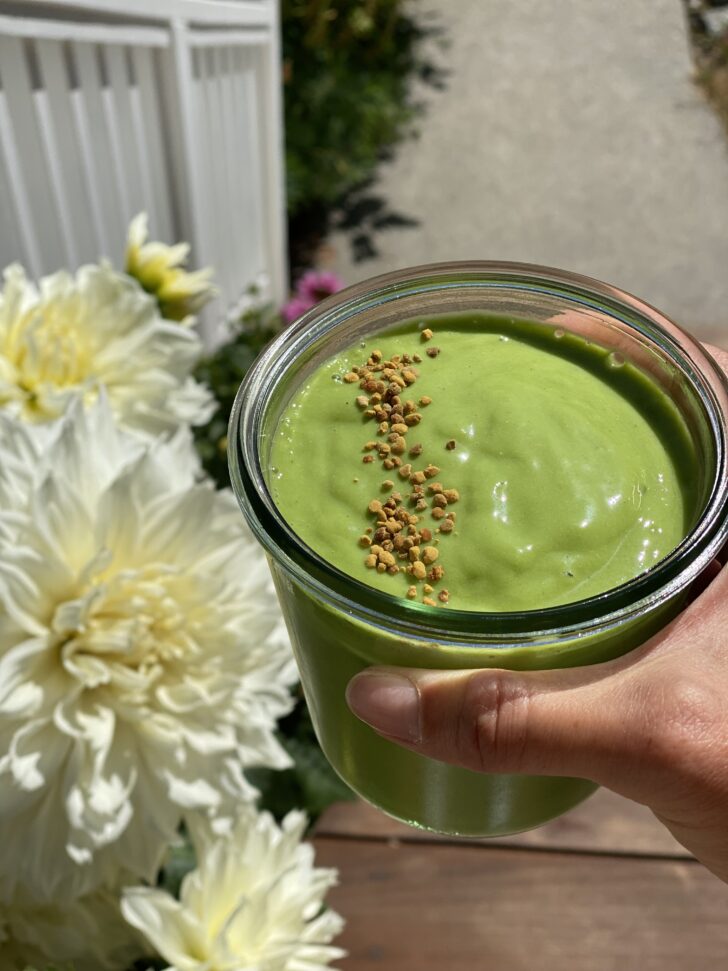
If you’ve ever needed a natural energy boost that doesn’t come from caffeine, this Tropical Green Smoothie is it.
This has been my ultimate pick-me-up drink. I originally made it on repeat during a super busy season of life when I was finishing my Master’s in Nutrition and balancing everything at once, and I still come back to it anytime I feel run down, depleted, or just need to feel like a functioning human again.
It’s light, refreshing, and packed with micronutrients.
And it actually tastes good (which is important because not all green smoothies do).
This smoothie is hydrating, mineral-rich, gut-friendly, and energizing without spiking and crashing your blood sugar.
Why This Tropical Green Smoothie Is Different
A lot of green smoothies are either:
- Basically fruit juice with a leaf thrown in
- Or aggressively earthy and hard to drink
This one balances:
- Natural carbohydrates for quick energy
- Fiber for blood sugar stability
- Healthy fats for satiety
- Electrolytes for hydration
- Micronutrients for recovery and cellular function
It’s what I call a functional smoothie, meaning it actually does something for you.
Ingredients
Blend in a high-speed blender:
- 1½ cups coconut water
- ½ cup kale
- ½ cup spinach
- ½ cup frozen mango
- ½ cup frozen pineapple
- 1 tablespoon hemp hearts
- ½ avocado (optional, but recommended)
Optional toppings:
- Bee pollen
- Sesame seeds
- Extra hemp hearts
Blend until smooth and creamy.
Serves 1–2 depending on portion size.
The Nutrition Breakdown (Why This Smoothie Works)
As a registered dietitian, I’m always thinking about what’s happening physiologically when we eat something… not just whether it tastes good.
Let’s break down the key ingredients.
1. Coconut Water for Electrolytes & Hydration
Coconut water naturally contains potassium, magnesium, and small amounts of sodium.
Potassium is especially important for:
- Muscle contraction
- Fluid balance
- Blood pressure regulation
- Nerve signaling
If you’re training hard, sweating, stressed, or just under-hydrated (which most people are), this helps replenish some of what you’re losing.
2. Kale & Spinach for Micronutrients and Gut Support
Leafy greens are loaded with:
- Vitamin K
- Folate
- Vitamin C
- Magnesium
- Antioxidants
- Fiber
Kale in particular contains compounds that support detoxification pathways in the liver. Spinach adds iron and magnesium, both of which support energy metabolism.
And no, you won’t taste them with the mango and pineapple in there.
If you’re someone who struggles to eat vegetables consistently, smoothies like this are a simple, non-intimidating way to increase intake.
3. Mango & Pineapple for Natural Energy
Mango and pineapple provide:
- Natural carbohydrates (your body’s preferred fuel source)
- Vitamin C
- Digestive enzymes (pineapple contains bromelain)
Carbohydrates are essential for:
- Brain function
- Mood stability
- Athletic performance
- Hormone production
When paired with fiber and fat (which this smoothie includes), you avoid the blood sugar rollercoaster.
What Is Bromelain?
Bromelain is a group of digestive enzymes found primarily in pineapple, especially in the stem and core.
It’s classified as a proteolytic enzyme, meaning: It helps break down protein into smaller peptides and amino acids.
Unlike most plant compounds that are antioxidants or fiber-based, bromelain is an active enzyme that directly participates in digestion and inflammatory processes.
Bromelain is known for it’s anti-inflammatory effects. Bromelain has been studied for its role in reducing inflammation. It may:
- Modulate inflammatory cytokines
- Reduce swelling
- Support tissue recovery
- Decrease markers of systemic inflammation
4. Hemp Hearts for Plant-Based Protein & Healthy Fats
Hemp hearts are one of my favorite smoothie add-ins. They provide:
- Complete plant protein
- Omega-3 fatty acids
- Magnesium
- Iron
Healthy fats slow digestion slightly, which:
- Improves satiety
- Supports blood sugar stability
- Keeps you full longer
If you want to increase protein even more, you could add a scoop of your favorite protein powder, but this recipe works beautifully as written.
(If you’re looking for higher-protein ideas, you can also check out my More Protein eBook)
5. Avocado for Creaminess & Blood Sugar Support
Avocado is optional, but I love it here. It adds:
- Creaminess
- Fiber
- Potassium
- Monounsaturated fats
Adding fat to a fruit-based smoothie helps:
- Slow glucose absorption
- Reduce crashes
- Increase fullness
If you skip it, the smoothie will be lighter and more juice-like. If you include it, it becomes creamy and satisfying.
Is a Green Smoothie Good for Gut Health?
Yes! When balanced properly.
This smoothie contains:
- Fiber from greens and fruit
- Prebiotic compounds from plant foods
- Antioxidants that reduce inflammation
Fiber feeds beneficial gut bacteria. When those bacteria ferment fiber, they produce short-chain fatty acids that support gut lining integrity and immune function. If you struggle with bloating, start small (½ serving) and build up gradually.
When to Drink This Tropical Green Smoothie
This smoothie works well:
✔ As a morning energy boost
✔ Pre-workout (light and digestible)
✔ Post-workout with added protein
✔ Mid-afternoon slump
✔ After travel
✔ During busy seasons when meals feel overwhelming
It’s especially helpful during high-stress periods when your nutrient demands are higher.
How to Make It Higher in Protein
If you want this smoothie to be more of a full meal:
Add one of the following:
- 1 scoop vanilla protein powder
- ½ cup Greek yogurt (if not dairy-free)
- ½ cup silken tofu
- Extra hemp hearts
That shifts it from hydration-focused to full recovery fuel.
FAQ: Tropical Green Smoothie
Can I use fresh fruit instead of frozen?
Yes, but add ice for texture. Frozen fruit gives that thick smoothie consistency.
Can I prep this ahead of time?
Best fresh. However, you can pre-portion ingredients in freezer bags and just dump and blend.
Is this good for weight loss?
It can be, depending on your overall intake. It’s nutrient-dense, fiber-rich, and naturally balanced, which supports appetite regulation.
Is it kid-friendly?
Yes! Especially if they like mango and pineapple. You can start with more fruit and gradually increase greens.
Can I use water instead of coconut water?
Yes. You’ll lose electrolytes, but it still works.
Tropical Green Smoothie (Hydrating, Gut-Friendly & Anti-Inflammatory)
Ingredients
- 1½ cups coconut water
- ½ cup kale
- ½ cup frozen mango
- ½ cup frozen pineapple
- 1 tbsp hemp hearts
- ½ whole avocado
optional toppings
- 1 tsp bee pollan
Equipment
- 1 blender
Instructions
- Add coconut water to a high-speed blender.
- Add kale and spinach and blend briefly to break down greens.
- Add frozen mango, frozen pineapple, hemp hearts, and avocado (if using).
- Blend on high until smooth and creamy.
- Pour into a glass and top with bee pollen or seeds if desired.
- Serve immediately.
Notes
- For a thicker smoothie, reduce coconut water slightly.
- For added protein, blend in 1 scoop vanilla protein powder.
- Fresh pineapple contains more active bromelain than canned.
- Best enjoyed fresh; separation may occur if stored.